Motion, Light, and Storytelling in AI Art, Paintings, and Miniatures

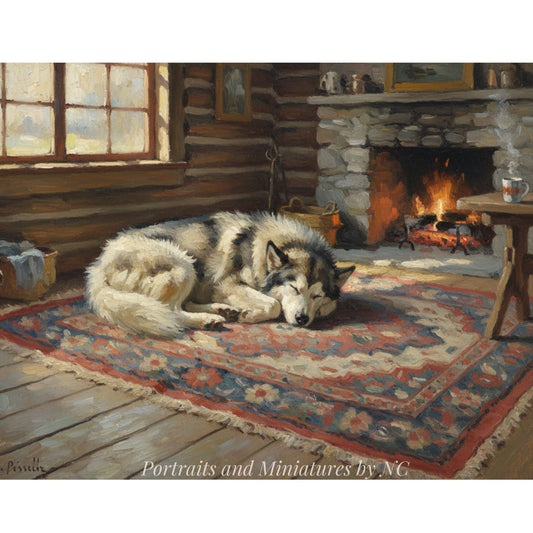
As an artist, I love exploring how far I can push an idea—especially when it comes to motion. I’ve been experimenting with AI-generated imagery lately, not just to create still scenes, but to see how subtle movement can bring a piece to life and add another layer of intrigue. Giving an image motion instantly changes how the viewer engages with it; it invites curiosity and slows the eye down.
While working on this image, I couldn’t help but think about my current project: the Doctor’s Office roombox, a collaborative piece with Fifijoy. As I was placing all the tiny specimen jars and details into the space, this visual theme naturally surfaced. The jars, the sense of contained mystery, the idea of observation and discovery—it all felt connected.
At the same time, I’m diving deeper into lighting and atmosphere, both digitally and in my physical work. Mood has always been important to me, whether I’m painting, building a diorama, or styling a miniature scene. Learning how light shapes emotion—how it can feel eerie, warm, clinical, or magical—is something I consciously carry across mediums. What I experiment with in AI often feeds back into my paintings and miniature environments, helping me see new possibilities for depth, storytelling, and visual tension.

For me, it’s all part of the same creative conversation: painting, miniatures, dioramas, and now motion—each informing the other in unexpected ways.