The Art of the Corner Box: A Concept

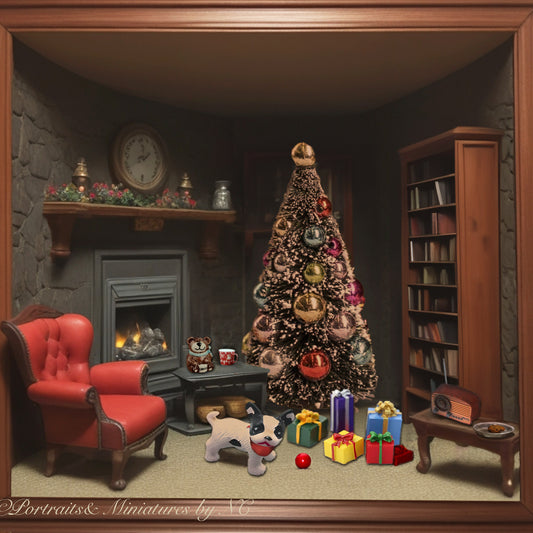
This Victorian library serves as a study in how light, history, and scale can converge to create a pocket of another world. This scene represents a concept I find deeply compelling: the Corner Box.
For the collector who seeks a specific atmosphere—perhaps a quiet attic or a moody, clock-filled study—these vignettes are an opportunity for artistic collaboration.
A Victorian library was more than a collection of books; it was a reflection of the mind. In the 19th century, these rooms were designed as masculine retreats—spaces of deep thought, heavy fabrics, and a specific, scholarly stillness.

A Palette of Intellectualism
To capture the authentic Victorian feel, we move away from the bright and airy. The Victorian palette was "grounded," designed to feel permanent and prestigious.
-
Tertiary Tones: The era favored "Drab" colors—not in the modern sense of being boring, but in the artistic sense of complex, muted shades. Think Pompeian Red, Hunter Green, and Deep Ochre.
-
The Dark Library: In rooms meant for reading, dark greens were the standard. It was believed that green was the most restful color for the eyes during long hours of study, and it provided a perfect backdrop for the gold-leaf lettering on leather book spines.

The Roman Wall Clock in Aged Mahogany — Available in the Atelier
The Anchor of the Room: The Clocks
I chose these Roman wall clocks to act as the room’s heartbeat. By hand-finishing the wood and aging the pendulums, I’ve given them a sense of weight that anchors the corner. They aren't just accessories; they are curated artifacts that dictate the room's mood.
I enjoy the process of curating these small sanctuaries, blending historic textures with hand-finished artifacts to tell a story. If a particular era or room speaks to you, I am always open to discussing how we might bring a similar vision to life through a bespoke commission.